Our team, support and all product sales will be offline December 22 – January 3 for our annual holiday break.  Wishing you all a safe, happy, healthy holiday season from Team Shannon Mattern!
Our team, support and all product sales will be offline December 22 – January 3 for our annual holiday break. Wishing you all a safe, happy, healthy holiday season from Team Shannon Mattern!
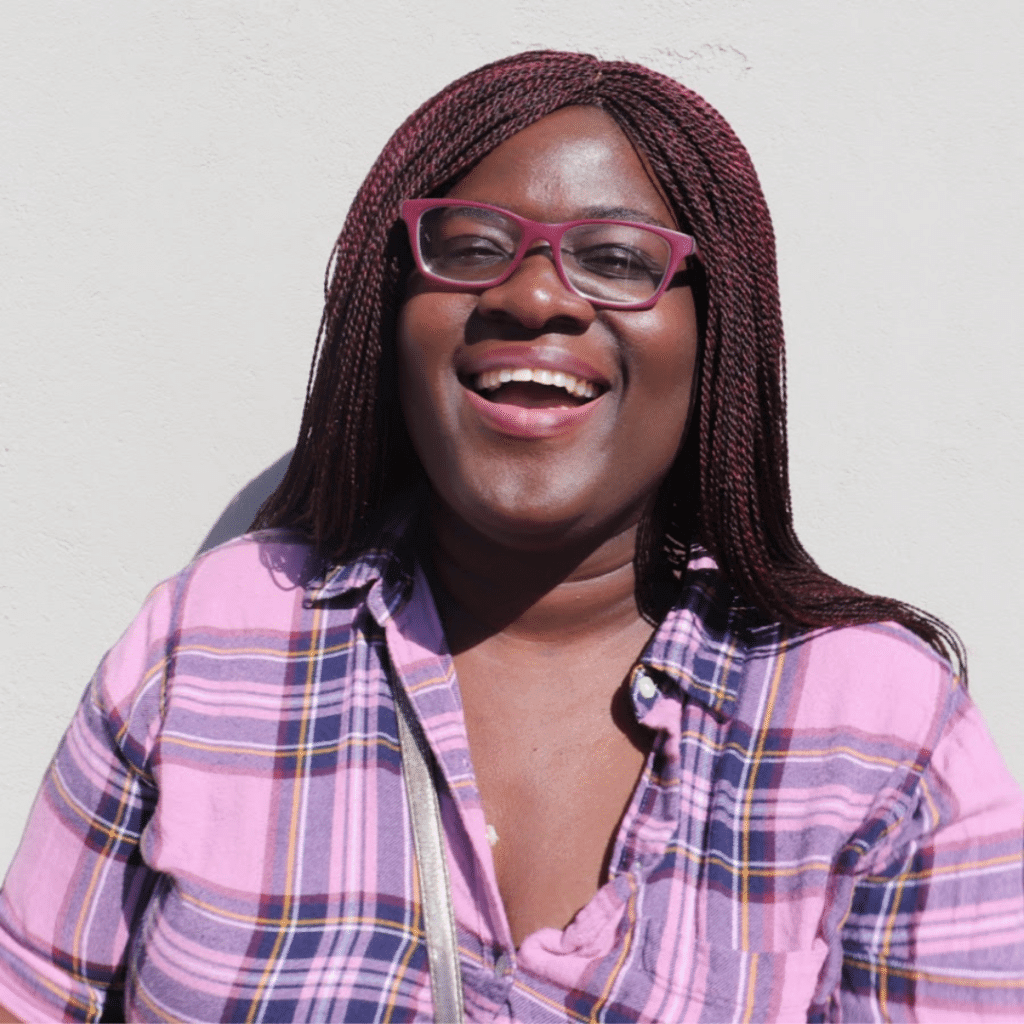
Gee Nonterah: Hi everyone Dr. Gee Nonterah. And first of all, before I even begin, I just want to thank Shannon for putting together this event. So excited when she reached out to me to present. And I'm so excited to present to you today, how to create crazy good content that grows your side business. Right? So a little bit about me. That's a picture of me. I completely stumbled upon the world of entrepreneurship. I was in grad school back
Gee Nonterah: In 2012 and I needed
Gee Nonterah: to make some extra money because my husband had lost his job. And we were a little strapped for cash. And so I decided to go on Google and search for cleaning jobs I could do on the weekend. And I stumbled upon a little thing called affiliate marketing. And that essentially led me to starting my own blog and was the catapult for everything that I have now. So I really did stumble upon entrepreneurship. Thankfully that stumble was not for, for, for nothing. Through that I was able to build a blog like I was mentioning, and I leveraged that blog to grow a freelance writing business from scratch. I started out in 2015. I started out as a social media manager, managing social media for local companies and also doing some writing as well. And then I fully transitioned away from social media to doing freelance writing in 2017. And that business, okay,
Gee Nonterah: helped my family tremendously when in 2018 out of nowhere my boss told me and my colleagues that we were going to lose our jobs, right. So that freelance writing business saved my family and me and got us through times that were tough. But because I had built a blog and because I had used content to market myself, I wasn't completely at a loss as to what to do or where our next meal was going to come from because I was getting paid and that was helping my family to sustain itself. Nowadays you'll find me coaching women on how to create money through content creation and how to write and sell their non-fiction books.
Speaker 3: Yeah.
Gee Nonterah: So if you've been on the internet for longer than five minutes, then you've definitely heard somebody say something like this. You need to create content. You need to create content. You need to be creating a podcast or a YouTube channel or a blog. Right. You've heard it. And if you haven't heard it, then you're hearing it. Okay. From me today. There are all these, and when I started the same thing happened, I heard all these people telling me to create content, start a blog. And that's how come I started a blog. I started a blog almost immediately. I find that found out that people were actually on the internet making money. Okay. And when I started this blog, I had no idea, you know, I was creating all this great content. People were reading my blog posts, but I had no idea how exactly people made money.
Gee Nonterah: So I began to really look okay. I started a blog, but how exactly does the blog help me make money? And it turns out that just creating content, it wasn't shocking after a while, but just creating content into a vacuum is not going to serve you. It's not going to do anything for you. So don't start a podcast just for the fun of it. Don't start a YouTube channel just for the fun of it. Don't start a blog just for the front of it. Don't start an Instagram just for the fun. If you want to do it for the fun of it, that's fine. But I think that most of us in this summit are looking to actually make money from a side business that we hopefully will transition to in a full-time capacity, or maybe it stays as a side hustle. And so if we're going to be making money, then it's important that yes, creating content is good.
Gee Nonterah: And you'll probably also hear that content is King, but content needs to sell what you have to offer. So here I say, what exactly are you supposed to do with that content? The contents your crazy good content that you are going to create should help you sell your products and services. You should never be creating content in a vacuum, especially as a business owner, it should be a conduit. It should be part of what you use. You will usually hear it called, be called a funnel that leads people into your sales process and gets them to buy products from you or buy your services. Okay. So yes, like I said, you can create content for fun, but if you're planning on running a business that brings you money, it is important that you create content with sales, as you know, sales with a sales mindset or sales are in the back of your mind.
Gee Nonterah: Right? So how exactly do you do that? Right? The way you get started with using your content to actually sell what you have is first of all to figure out what you're selling to get really clear on that. And this is a place where I know that people struggle a lot. Okay? People struggle a lot because you know, a lot of us are very multi-passionate and if you're on this summit, then it's very, very likely that you are a multi passionate kind of person. You like a lot of things. We want to try a lot of things. We're easily distracted. Let me know if you're like that. Just raise your hand wherever we, I know these are recorded but raise your hand, wherever you are, right. It is, we can be really difficult, but I think it's really important for you to get clear on what you're selling and what your value proposition is.
Gee Nonterah: And then all that, right, you'll have to discover, for instance, who is your audience? Who are you serving and what are you serving them with? So for instance, my value proposition is that I coach women to write and sell via nonfiction books. And specifically I went even deeper than that. I would say I coach professional women, right, who are busy and don't have time to finally write and sell their first nonfiction book so I was being super specific. So I've identified the audience, which is professional women who are busy, and usually don't have time to write their books and I'm serving them with a service of, okay, when you join me and we coach together, while I coach you, then you are going to be able to come out with the first draft of that non-fiction book idea that you've had for the last 10 years, but because you're so busy have not been able to write.
Gee Nonterah: So it's really important for you to clarify who your audience is and what you serve them with. Now, once you are clear on that, this will begin to give you a roadmap on what kind of content to create. And here's what I mean. So I told you, I coach women to write and sell their non-fiction books, right? Well, what do these authors need in order for me to take them from somebody right from that busy professional woman who had no book at all to being that professional woman who finally has a first draft of their book in hand, that they can hand off to an editor and get edited and get a book cover. And so that, that gets published. Okay. One of the things that I know that these women need, these authors need are author platforms. In order to build an effective author platform, you have to have great content.
Gee Nonterah: So because I know that in order for them to get to that, I'm not just coaching them to write a book that they can launch into a vacuum. There are people like that. There are people that only want to write a book just for, you know, the sake of saying, Hey, I did it. So, like I said, I coach these women to write and sell their non-fiction books. These authors are going to need author platforms. Maybe they want to use their book as a launch pad or as a supporting source of income for their speaking careers. Maybe they want to be able to get on television. Maybe they want to be able to use that book to support a coaching or consulting program they have. Maybe they want to be seen as an authority on a specific subject. In order for that to happen.
Gee Nonterah: they cannot, it just can't happen that they publish a book into a vacuum. They need to have an author platform. And also when we launch the book, they need readers. Okay. And so you get readers by building an author platform and an effective author platform is built on the back of stellar content. And so, because I know that I'm going to not just coach these women to write their books, because I actually walk them through, you know, going from blank page to actual finished book. But they're also going to need to build an author platform and create content. Okay. I know that is a journey they have to go through, alright, and this journey they have to go through involves me giving them how to write a simple 10 chapter outline for that non-fiction book, so that they have an outline for the book.
Gee Nonterah: It involves me showing them how to do keyword research, category research for Amazon Kindle. It involves me showing them how to be productive as writers and as authors. It involves me showing them how to use email marketing, to engage their potential readers, and how to build buzz for their book using email marketing. And also involves me showing them how to use content marketing, to build their author platform. It also involves me talking to them about having a successful right to mindset. So you can see that if you take that journey , alright, of your potential client, and you know, at this, at this very minute, I want you to sit down. I'm going to pause for just a minute. And I really want you to think about who you serve and what you serve them with. Just take a minute to write that. It doesn't have to be perfect. It may go through various iterations, but sit down and write and think about that right now. Whether you are a web designer, you are, you know, a coach of some sort, you offer social media services, whatever it is, who is it that you serve and what do you serve them with ?
Gee Nonterah: So I hope you were able to write that down. So now that you've written that down, the next step is really to think about what journey does that person have to go through? Where are you taking from them from, and where are you taking them to? It's kind of like those, if you watch those late nights commercials where somebody's selling some kind of like exercise program or some kind of like what shake that allows you to lose weight, right? There are always before and after pictures. So where is your client or customer before? And where are they once they've encountered your product or service? There is a journey between those two places. And that journey is where you're able to create valuable, crazy, good content that helps that client or that customer on that journey. And on that journey, right, they not just engage your free content, but they will also encounter your paid products, your paid services that help them get to where they need to go.
Gee Nonterah: A book I'm going to recommend to you to read is called Building A Story Brand. And in Building A Story Brand, the author writes about the power of story or how to use the framework, a story framework, right, to actually take your client or customer from, from the place they were to the place they want to go. And the idea there. Okay. And it's such a fantastic, because I want everybody on here to read it, but the idea there is that, you know, in every story in every movie you have ever watched, right, there's always a hero
Gee Nonterah: Or "She-ro"
Gee Nonterah: All right. There's always somebody, that's the center of the movie, right? And that, or the main character. And this main character faces a dilemma, right? They go through a dilemma and the whole movie is about them finding ways to overcome that dilemma, to find a resolution to that dilemma. And usually what ends up happening is that they have a guide and that guide could be a person. It could be a book, it could be a map. It could be anything, but they have a guide that is essentially leading them through that journey, alright, to resolving the dilemma. And so in the, in the book, the Story Brand, Building a Story Brand, essentially the author just talks about how you as a business owner are the guide who is taking your client, your client is the main character of the story, you are simply the guide who is taking your client or customer from one end to the next to the place where their problem is resolved. Right? And if you begin to think about that journey and begin to think about all the obstacles and all the problems they need to solve in order to get to that resolution, you will have a lot of content just like I have here, right? How to actually write the book, how to do the keyword research, how to be productive, all of these things in order for them to be the author that they want to be.
Gee Nonterah: So there are three main types of content that you can create. You can create video content, audio content, or written content. This is what all social media or all content platforms come down to. You can create video content. So usually this could be YouTube videos. This could be Facebook live videos. This could be Instagram stories. There could be, this could be Tik Toks, right? You have audio content. A lot of the time audio content is in the form of podcasts. Now we have a social media platform called Clubhouse that is primarily audio. Okay? And then you have written content and almost every platform uses written content. You have Instagram captions, you have Facebook posts that are written. You have blog content. And so you have all of that, right? So this, I want you to think about these three types of content that you can create.
Gee Nonterah: Now. It is important for you to choose. As I was going through all these three content forums, I was mentioning different platforms, right? I mentioned podcasts. I mentioned blogs. I mentioned YouTube, Instagram, Facebook Tik Tok. Okay. So my recommendation, if, to anybody that is just starting out is to choose at least. And I'm not even going to say at least. Is to choose one long-form platform. I'm going to explain what that is. And one short- form content platform. Okay. What do I mean by long form content and short form content. This is what I mean. So long form content includes blog posts, podcasts, self hosted videos. So blog posts, you don't. Oh, everybody knows what a blog post is. Podcasts more than likely, you know what that is, but if you don't, this is audio content that is recorded and uploaded and you can listen to them through a device, right? And then video, videos. Okay. Self hosted. Now I put this self hosted here because a lot of the time people also consider YouTube a form of long form content. But the thing is that when I talk about long form content here, I'm talking about content platforms that you actually own. You can own a blog. You can own a podcast. Videos
Gee Nonterah: on YouTube you don't completely
Gee Nonterah: Own. Okay. So as much as people are able to build large platforms on a platform like YouTube, you don't completely own YouTube. If You Tube, you know, says tomorrow that they are going to shut down, all your videos are gone with them. However, if you self-host your videos, let's say you self host it in a place like Vimeo, which is not a platform like YouTube, but you can store your videos. They can pay a little bit of money each month. So your video is there and maybe display those videos on your website. Those are, those are self hosted right. Now, but YouTube is still a kind of a form of long form content, except because it's not our platforms, I always hesitate, and I always make that explanation. All right. Now, what does long form content allow you to do. Your long form content,
Gee Nonterah: Okay. Is your main stake in the large world of the internet. So there's this large world of the internet and you'll long from content is going to be your main hub, alright. So that could be your podcast. Again, that could be your blog posts or your blog, or that could be, you know, the self hosting videos that you have, or even YouTube, right, taking into consideration the caveat that I mentioned before. So this place is where people are going to listen to you for a long amount, long amounts of time. So a lot of the time people listen to about 70 to 90% of a podcast. Imagine being in some of these ears for 20 minutes each week, that is some powerful Mindshare. Okay. Some people don't even talk to their spouses for 20 minutes each week. All right. So for you to have a conversation with somebody in their head, alright, well, not in their head, but in the ears, right in the headphones, alright for 20 minutes, 30 minutes an hour per week is really, really powerful.
Gee Nonterah: When people come and read your blog, right, they're reading something that you've written, they're probably spending two, three, four, five minutes reading that piece of content. That is a lot of time they're spending with you on the internet because people are very fickle on the internet. Okay. All right. Or they watch a YouTube video of yours and they decide to binge watch about five of your videos on a similar topic that is all long form content that allows you to begin to establish a relationship. I always see long from content as how you establish a relationship with those potential clients and customers. All right. And then you're going to have your short form content. I always like to think of short form content as your outposts, right? Your, your, your blog podcasts, YouTube, that is your main platform. Right. But then you can also have these outposts, right?
Gee Nonterah: Like Instagram or Twitter or Tik TOK, where you're creating short, punchy contents, right. That takes the relationship further. So your short form content, will be punchy or be shorter, it will allow you to build deeper relationships with your audience. And if you are a mega Instagram user like me, right, you don't just post your feed. You're also posting to stories. You're probably posting reels. You're probably using IGTV right. All of these are powerful tools. I think Instagram is such a versatile platform, even though, you know, I kind of poke fun at them that they stole most of their features from other popular apps. Right. But Instagram gives us a powerful way for us to connect with our audiences. When you're on a podcast, right, you're talking, and then you may be talking into a microphone and, you know, there may be a hundred people, a thousand people that listen to you every week, who yes, you are talking to them personally through their headphones, but they don't get to relate with you on a personal level.
Gee Nonterah: But if you're on your Instagram story and you share a pull or you share a funny story, they're able to, you know, give reactions there and then, and you're able to build that deeper relationship with them that can take that sales relationship further. Right? So short form content is also important. So this is why I always tell people to choose one long form content platform and then choose one short form content platform and then create your content consistently for these platforms. All right. So what types of content can you create? You can create content around mistakes that people make in, in your industry, right? There's so many mistakes. Let's say you're a hairdresser. And then you're like, these are five mistakes people make when they self color their hair at home. Myths in your industry. What are some pervading myths, break them for people. Okay.
Gee Nonterah: Break those myths, bust those myths. Personal stories. Now with personal stories, you always want to tie the personal story to, again, your business. You don't just want to tell random personal stories just for telling them. Yes. I know that it's a place for telling personal stories that are just a personal story, but as a business-minded person, I always think that even if I'm going to tell a personal story it should be tied to the larger brand story and not just be a random, you know, post. So anyway, that's how I approach it. How-tos and tutorials, right. Q and A's. Are there questions that people have asked? So, you know, one of the ways that you can do this is to look at other questions that people have asked other people that are doing similar things to you. Answer those questions. If you don't have an, or a big audience yet, that will give you a lot of questions, answer those questions for people, right.
Gee Nonterah: That can be your form of Q and A. I've seen people do it on, on YouTube for instance. And I've always been like, wow, that's amazing. Anyway, so Q and A, you can comment on the current events in your industry alright. So what are, what are the current events in your industry, comment on it? What are your thoughts, alright. This establishes you as a thought leader. All right. Comparison posts. And so in my world, MailChimp and ConvertKit are two of the biggest email service providers for marketers. And so, and people are always looking for, okay, I want to get this service versus that. What can I, which one should I get? So you can create content around this versus that. Okay. Best tools. What are the, some of the best tools in your industry. Experimental results. These are experiments that you run yourself. Like you decide that you, I, you know, colored my hair red for 30 days, or, you know, I tried this software for 30 days and here's what I found out.
Gee Nonterah: So these are experiments that you do yourself. You know, people are always looking for, does somebody else tried this? You know, think about the last time you want to get something, you most likely went on some social media platform or went on YouTube to search for, well, what's a good tool to use for this, you know, has somebody ever tried this before? And so if you try it and you share with people that can be really powerful. And you can definitely find more content ideas using various tools. Okay. So one tool that, you know, people usually tell me why I didn't think of that is using Amazon Kindle. So Amazon Kindle, the Kindle store, if you use it on a desktop, you can do this, is I like you to go on Amazon Kindle. And if you have a topic where you serve people, go in and go search for books on that topic.
Gee Nonterah: So let's say that you are an IT person and you help people become certified in a particular IT certification. You can go on to Amazon Kindle, type in that certification and see if there are any books on the topic. If there are any books on the topic, and especially if those books have been reviewed by other people, let's say they even have 10 reviews. I would say, go and check out that, click on that book in the Kindle store. And then just check out like the front page. So Amazon Kindle gives you the look inside feature, look inside and see what the, the table of contents are. Those are content ideas for you. What are other creators or other business, people who are creating the same topic that you are creating? What are they also creating? So many tools. What are other that allows you to do this?
Gee Nonterah: If you choose to go on YouTube, for instance, there's a tube and there's a tool known as TubeBuddy. You can use TubeBuddy to research. What other types of content others are creating and then create similar content alright. I'll give you a third one. Another tool that you can use is this one is, especially for my blog is alright, is a tool known as Ubersuggest. Ubersuggest. If you go into Ubersuggest and you type in a phrase or even another, a competitor's website, for instance, you'll be able to come up with some ideas for content. So there are all these tools out there that allow you to research content ideas so that you can create them for your audience. Now, once you've created the content you're going to need to distribute the content. Content creation is just the first step.
Gee Nonterah: You need to distribute the content. Okay? And so this may mean you have to do some email marketing. This may mean you need to share your content on social media, especially for the long form content, like your podcasts, your YouTube videos, your blog post, right? You may want to encourage others to share it for you. Tell your friends and family, you know, when you first get started and nobody knows who you are yet, like tell friends and family to help you out. I know sometimes some of us want to keep some of these things from our friends and family. But if there's anybody that you trust at all, just tell them, Hey, I started this thing. Can you share it for me? And I used to be a little, you know, like, let me just insert this, personal story. Yeah. I used to be a little intimidated by the fact that maybe my colleagues at work or my friends and family would see that I started a business. And you know, and my background is really in, in biomedical research and nursing. So I didn't want people to think that I flaked out and decided to go be a business owner, you know? And, and that was a wrong mindset for me to have, but it took me a while to realize that, listen, everybody's busy with their lives, right?
Speaker 7: They're not really thinking about you like that. So, you know, by all means, reach
Gee Nonterah: out out to friends and family, at people who are consuming your content right now. And ask them to share, collaborate with others in your niche, alright. So reach out to other people in your niche and, and, you know, build relationships with them, and start out with building relationships, to be honest, don't just go to them just to collaborate, just so that you can build your audience, you know, engage them and relate with them. And with time you begin to build those collaborations that allow it to grow your brand. Another really powerful tool, which is so broad. I cannot cover in this talk at all, search engine optimization. If you're doing blogging or podcasting and YouTube, you can use the search engines, okay, Google and YouTube, in your favor, you can, you can actually optimize your content so that you can be found more in those search engines, right?
Gee Nonterah: So those are some ways that you can distribute your content. So what have we learned today? We have learned that content is powerful. Content is what allowed me to build a freelance. First of all, as a social media manager, freelance social media manager, and then as a freelance writer. And that also allowed me to, you know, when I lost my job to actually work full time as a freelance writer alright. It's important that you don't create content in a vacuum, it needs to be tied to your business goals. And this is why I was saying that it's important for you to define who it is that you serve and what it is that you serve them with. And one thing I even forgot to add in here was the fact that make sure to get calls to action when you post your content, you know, do you want them to go listen to a podcast?
Gee Nonterah: Tell them. Do you have an ebook you want people to buy, tell them. Do you have, you know, some coaching services, some website design services you want to offer, tell them, okay. So it needs to be tied to your business goals. Choose one long form content platform and one short form content platform. And I explain what those were and make sure that your content is answering pressing needs for your potential clients and customers so that they can move from that before place, where they didn't have their problems solved to that place where their dilemma is resolved. Okay. All right. So thank you so much for listening to me. Thank you Shannon. Once again for having me. If you listened to this and enjoyed it and took copious notes, then come onto Instagram and say hi to me, I'm very active on Instagram. You can also check out my website geenonterah.com and I do have a podcast called The Create & Prosper Show that I hope you'll also check out. So all the best with your content creation journey and also all the best with your business.